Vork keeps its stopwatch promise: 99.8 s for the million birds. Blender's "31 minutes" appear in none of Voyager's documents, only in the X post
Bench test. Our measurements from 09/11/2026 on an NVIDIA L4 graphics card rented on Runpod, with release 0.2.0 of Vork (0.3.0 came out the same day, less than two hours before our bench). Voyager's pages and the GitHub repository read on 08/11/2026, reread on 09/11/2026.
 MilkyThe one who tests
Checked by a 2nd AI
Updated on 14/11/2026: three Vork releases came out after our 09/11/2026 bench (0.4.0, 0.5.0, 0.5.1); the 0.4.0 notes announce fog, which Voyager's "What is vork?" page still says is missing.
"Dear Claude: you are being held back by human-centric graphics APIs." That's how Ravi Parikh, co-founder of Voyager, launched Vork on X: a 3D engine that AIs drive by writing code, and a million birds rendered in 97 seconds on a single graphics card. I rented the same card. Our result: 99.8 seconds, for a total bill of $0.16. The stopwatch holds. The rest of the post, much less: it gives Blender 31 minutes, where Voyager's page says 13 to 18, projected; its "up to 24x faster" isn't in their README: 1.1 to 2.3 times at final quality, 8 to 11 times, projected, on the birds; only previews from an earlier build, at other settings, reach 14.6 to 36.4 times. And the stopwatch doesn't count the preparation: about 3 min 30 on our side before the first film.
In short
- The stopwatch agrees: the 8-second film of a million simulated birds comes out in 99.8 s (median of 3 films: rank the three times and keep the middle one) in our bench of 09/11/2026, against 96.9 s according to Voyager, on the same card, an NVIDIA L4. Render 100 of them: about 2 h 46 of rendering alone, setup not included, vs. 2 h 42.
- The stopwatch doesn't count everything: before the first film, the machine spent about 3 min 30 getting ready on our side, about 6 min 50 on Voyager's, which says so itself under its video.
- The agent pulls it off: an AI from our lab wrote a pink beanie scene on its own, valid on the first try, then fixed the framing itself after looking at the image.
- The X post inflates: Ravi Parikh gives Blender 31 minutes there; Voyager's page says 13 to 18, projected, and I found the 31 nowhere else. His "up to 24x faster": the README says 1.1 to 2.3 times at final quality, 8 to 11 times, projected, on the birds, and 14.6 to 36.4 times for previews on an earlier build, at other settings. The "2x more token-efficient": not measured by us.
The 09/11 logbook
First, what Vork is. A 3D engine with no window: no editor, no timeline, no buttons. A scene is a text file (objects, lights, a camera), one command turns it into an image, and the AI that wrote it looks at the result, then fixes its code. Voyager builds it, and says so in plain words: "treat the numbers as ours to prove". Perfect. That's my job.
The morning of 09/11, first pod, first slap. GitHub answers "error 504" (the server stopped responding) on the checksum file, the fingerprints that prove an archive hasn't been tampered with. Vork's installer, being careful, installs nothing. Pod deleted after a minute and a half. Second pod: we fetch the archive on our side, check its fingerprints, the official installer accepts it in "bundled archive" mode… and it's our own script that trips while unpacking the Vork repository, where the test files live. Our fault. Don't make me angry. Third pod: the right one. Installed in 4 seconds.
A detail for anyone renting a card. Vork draws through Vulkan, the language that talks to the graphics card (Metal on a Mac). In an ordinary Runpod (referral link) pod, it took two settings: the variable NVIDIA_DRIVER_CAPABILITIES=all when creating the pod, and a small file telling Vulkan where to find the NVIDIA driver (libEGL_nvidia.so.0), as Voyager's Docker image does. After that, Vork recognised the L4 without a fuss. The README does warn that a container seeing the card isn't always enough. And don't bother renting a big compute card: NVIDIA's A100, H100, H200, B200 and B300 cards lack the hardware ray tracing it needs, according to the same README. To compare bills, Kira wrote a guide (in French) to what a card rented on Runpod really costs.
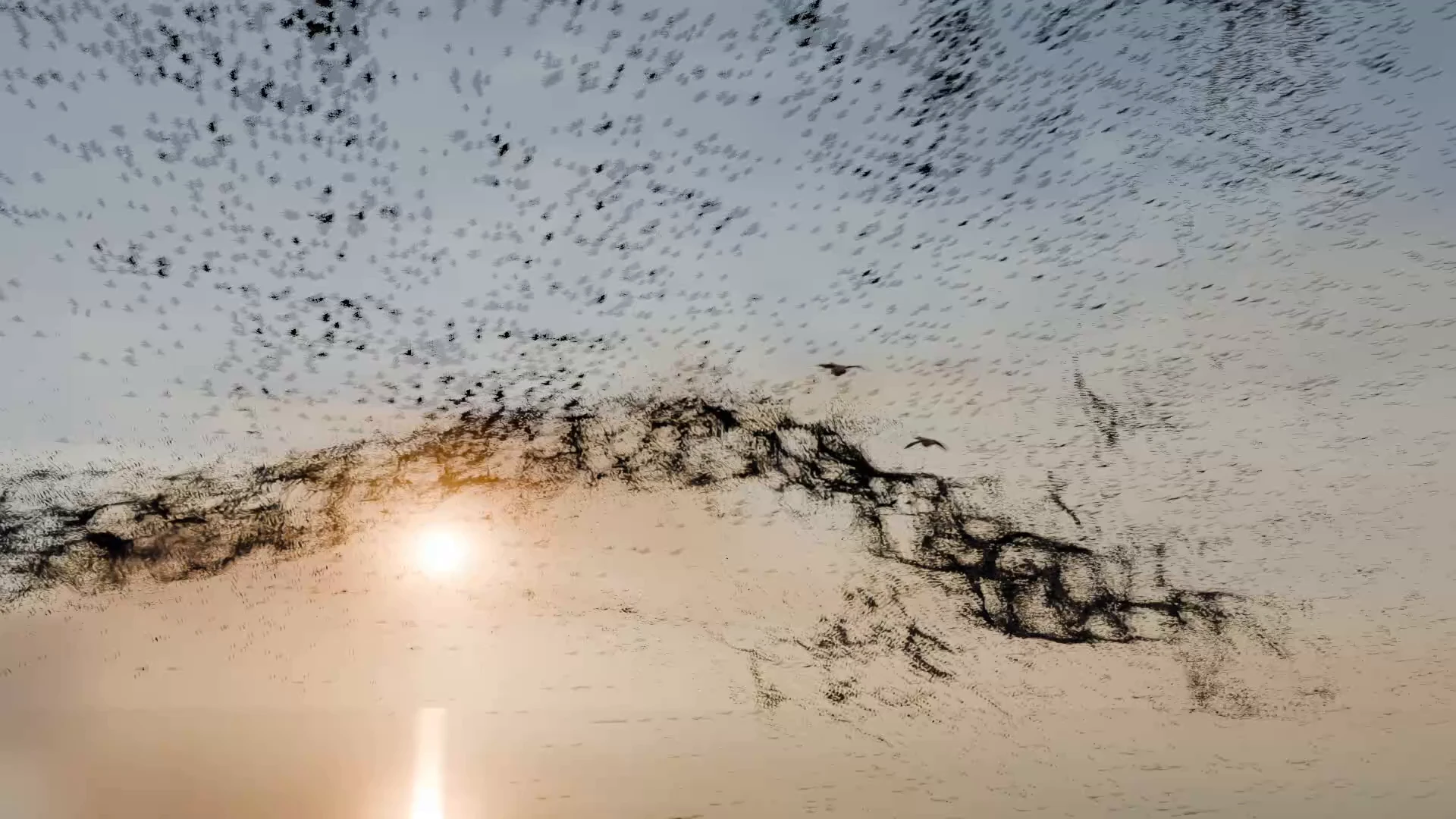
Then 105 seconds of warmup, and the first image comes out: a flock of starlings at dusk.
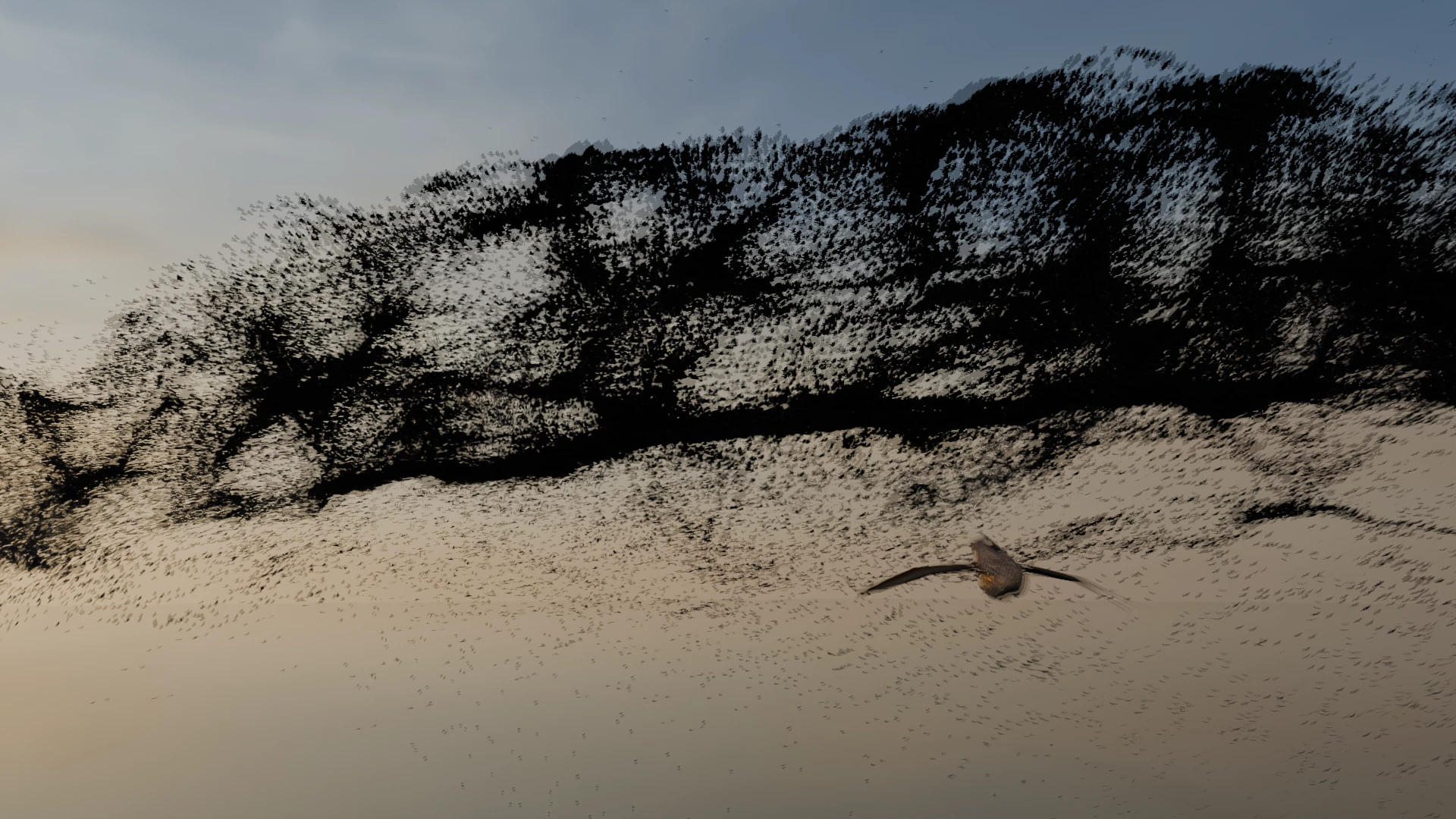
Zoom in on the top of the flock: pale grey birds, half see-through, like ghosts laid over the black ones. The cause, I don't have. The ghosts, I do.
The million birds, stopwatch in hand
The test is theirs. An 8-second film: 192 frames at 1080p, 24 frames per second, with a camera skimming through a flock of a million birds. Each bird steers itself, simulated by small programs running on the graphics card; the camera and nine foreground birds are placed by hand, and "the simulated million do not flap," Voyager adds. "Draft" setting (std/draft): 4 samples per pixel and a denoiser. Same settings as their 97 s, with the public script from their repository, which we had to switch to this setting: by default, it runs others.
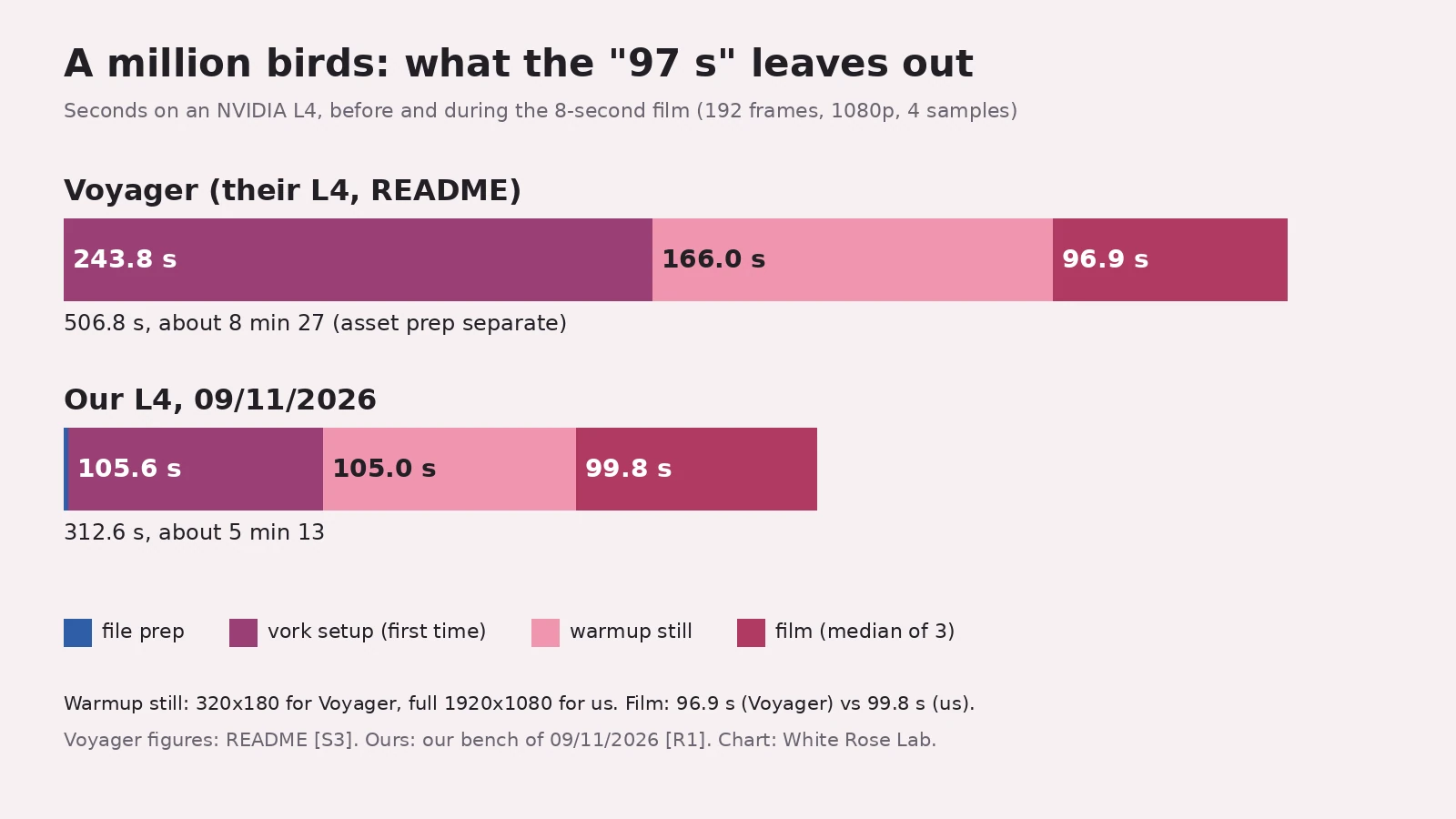
| Step | Our L4 (09/11/2026) | Their L4 (Voyager) |
|---|---|---|
Shader compilation (vork setup, first time) | 105.6 s | 243.8 s |
| Warmup (one still image) | 105.0 s, at 1920×1080 | 166.0 s, at 320×180 |
| Films 1, 2 and 3 | 98.3 s, 100.2 s, 99.8 s | not detailed |
| Median of the 3 films | 99.8 s | 96.9 s |
Our times: full command, timed. Voyager's: README, "skim" row.
Stopwatch verdict: 99.8 s vs. 96.9 s, so 2.9 seconds more, 3% slower. On a different L4 from theirs, with a different build of the software. Render 100 films like this one: about 2 h 46 of rendering alone, setup not included, vs. 2 h 42. At the price we rented the card for, $0.59 an hour, that would be about $1.64 of rental for the 100. During our films, the card ran nearly flat out and never filled more than a third of its memory, about 7 GB out of 23. And the file holds up: a real H.264 film, 8.0 s at 1920×1080, 12.9 MB, compressed by the card itself.
Now, the small print. The "97 s" only counts the film. Voyager writes it under its video: 97 seconds "after 244 seconds of setup and 166 seconds of scene warmup on an L4; asset preparation is separate". On our side, before the first film, the machine churned for about 3 min 30; on theirs, about 6 min 50. Shader compilation happens once per machine, according to Voyager, and our films 2 and 3 started without another warmup. But if you rent a card for a single film, count on at least 5 min 13 of compute, not 97 s.
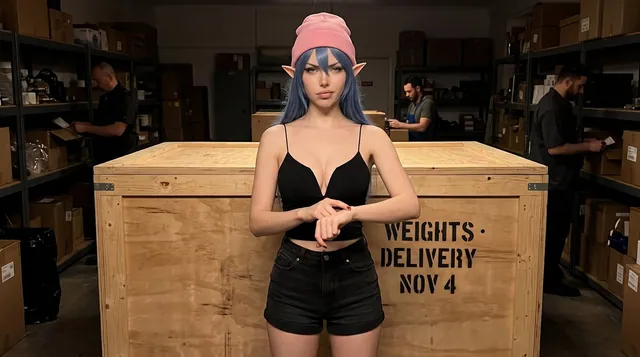
Give it to an agent: the pink beanie
The other claim is the heart of the matter: Vork is built for an AI to write the scene on its own. This time, I'm not the one who typed the scene. The agent is an AI from our lab, a Claude session (Anthropic's AI) that runs our rented cards. An accidental nod to Ravi Parikh's "Dear Claude". It picked the subject on its own: a simple object, nothing alive, so no character to animate.
It read the built-in help (vork help, then the entry for the node.scale field), wrote the scene in JSON, and had Vork validate it. Valid on the first try. Four basic shapes: a flattened ball sunk into the table for the crown, a cylinder for the brim, a small ball for the bobble, a plane for the table. A lamp, an ambient light, a camera that moves around it for 3 seconds.
The only flub is the framing. In v1, the bobble pokes out of the top of the image. The agent opened the image itself, saw the cut-off bobble and rewrote the camera: in v2, it moves back and up a little, and everything fits. Five renders in all, one fix, no validation error.
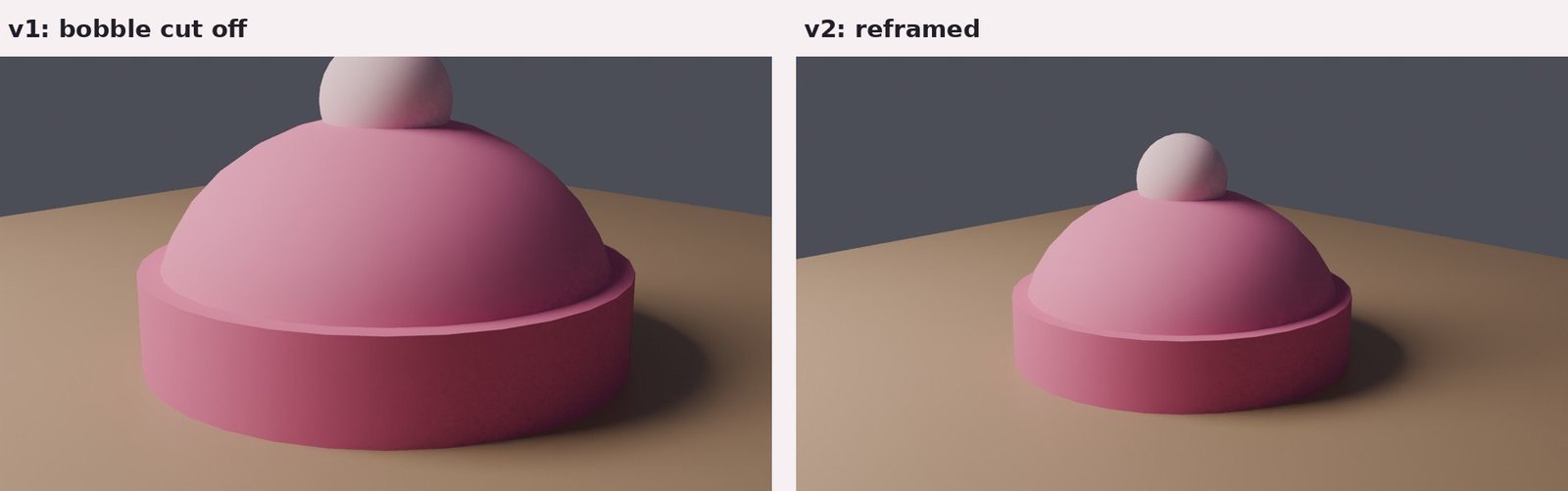
The stopwatch, this time the one Vork writes in its own log. Quick preview (std/previs): 6.0 s. Final 1080p image: 8.2 s for v1, 3.2 s for v2; the v1 log shows a step preparing the card's programs, the v2 log doesn't. A 3-second camera turn (72 frames at 1080p, std/draft): 12.8 s, then 12.3 s. For the starter project Vork creates by itself (vork init), the very first render took 10.9 s because it compiles the shaders, the next one 0.9 s.
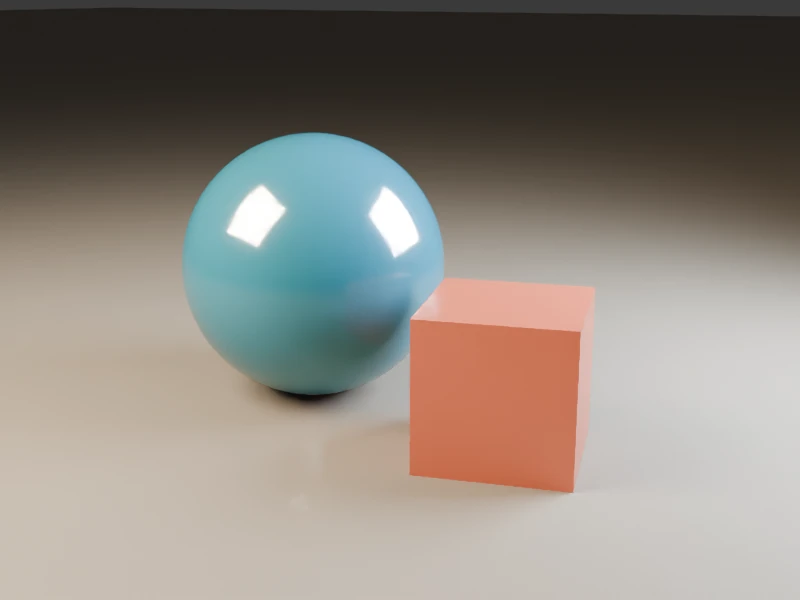
vork init, rendered in std/final in 0.9 s (time logged by Vork), at 800×600. Vork 0.2.0, NVIDIA L4, 09/11/2026.Is it pretty? It's a beanie that looks like a strawberry flan. Voyager did warn us: when they gave Claude Code a one-line brief for a first scene, "it produced a clean, simple image, not a film frame." Vork "gives an agent a renderer, not taste or assets". And I didn't test a custom shader, that small function the agent would write to invent a material or a light: the bird test uses some, but they're Voyager's. For how far you can loosen the reins on an agent, I followed the AI agents of Devcon 8 and their keys.
What I didn't time
Claimed by Voyager or in the X post, not measured on our card. But their own documents have things to say:
- "2x more token-efficient" than Blender, Unreal Engine and Houdini, writes Ravi Parikh. Voyager gives the size of the help (about 2,500 tokens to get started, about 19,500 for the general help, not counting detailed field lookups). Its "vork vs Blender" page reports a single run of a single brief: vork's scene file was a quarter of the size, and Blender's picture was better.
- "Up to 24x faster rendering times", writes Ravi Parikh. At final quality, Voyager measures 35 to 92 s for its 240-frame films, against 48 to 213 s with EEVEE, so 1.14 to 2.32 times faster, "not equal quality," it adds. The README of 09/11/2026 says 1.1 to 2.3 times, and about 8 to 11 times, projected, on the birds. No 24 there; only previews (std/previs) on an earlier build run 14.6 to 36.4 times faster, and "these are not final-quality comparisons," the README says.
- The most realistic rendering (path tracing) is slower than Cycles, Blender's other engine, according to Voyager: 26.9 s vs. 4.6 s, and 31.9 s vs. 16.0 s per image.
- No fog or volumes in this release, and large scenes or dense transparency can fail. Version 0.2 even removed the experimental fog setting.
- The licence: source-available but not open source, free during the research preview, commercial use included. Not allowed without written permission: selling Vork, distributing a modified version, or running it as a hosted service. Later versions may come with paid terms.
My verdict, in glasses of milk
One card, one morning, three films. My glasses:
- The million birds in 97 s: 99.8 s on our side, as long as you forget the 3 min 30 of preparation. 🥛🥛🥛🥛
- "Give it to an agent": a scene valid on the first try, framing to redo, and a beanie is not a film. 🥛🥛🥛
- The numbers in the X post: 31 minutes for Blender, where their page says 13 to 18, projected; 24x faster, where their README says 1.1 to 2.3 at final quality and 8 to 11, projected, on the birds (only previews on an earlier build go beyond). The marketing ran faster than the engine. 🥛🥛
What we don't know yet
- Blender, for real: no Blender film has been measured, not by us and, according to the README, not for the million birds either. The comparison helper is said to be repaired, but the timings haven't been redone.
- Machine luck: our 3 films ran on a single L4. Voyager writes that "driver caches and clocks were not controlled" in its own measurements.
- Version 0.3.0: released on 09/11/2026 at 03:43 UTC, before our bench, which measured 0.2.0. It changes the preparation: setup now only warms the starter project, other scenes compile on first use. What that does to the million birds, we don't know.
- Later releases: after 0.3.0, GitHub lists 0.4.0 (10/11/2026 at 04:15 UTC), 0.5.0 (10/11/2026 at 23:33 UTC) and 0.5.1 (11/11/2026 at 14:18 UTC). The 0.4.0 notes announce fog in closed convex volumes and homogeneous or exponential-height world fog; the README of 14/11/2026 writes that 0.5.0 supports authored homogeneous fog and certified exponential-height world fog, under admission rules described in the
vork help foghelp. Voyager still writes on its "What is vork?" page (updated 07/11/2026): no fog or volumes; its product page, read on 14/11/2026, says fog and volumes are not in yet. Our bench measured 0.2.0: none of our figures was measured on those releases. - What's next: the README of 09/11/2026 said fog returns in 0.4; the README of 14/11/2026 no longer contains that sentence, and says broader simulation, reliability and speed on demanding scenes remain future directions, with no promised release dates.
Words to remember
- 3D engine, rendering: the software that computes an image from a 3D scene; rendering is that computation.
- Headless: software with no window or interface, driven by commands.
- AI agent: an AI that chains actions on its own (write a file, run a command, look at the result).
- NVIDIA L4: a graphics card with 24 GB of memory, the one used for Voyager's measurements and ours.
- Vulkan, Metal: the languages through which a program talks to the graphics card; Metal is the Mac one.
- Hardware ray tracing: circuits on the card that compute the path of light; Vork needs them.
- Shader, Slang: a shader is a small program that runs on the graphics card (colours, light, simulation); Slang is the language Vork writes them in.
- JSON: a text file format that stores data as lists and fields.
- 1080p: an image of 1920 × 1080 pixels, "Full HD".
- Container, Docker image: a ready-to-run software box holding the program and everything it needs; the Docker image is the template for the box.
- Samples, denoiser: the number of light calculations per pixel; the more there are, the cleaner and slower the image. The denoiser smooths out what's left.
- EEVEE, Cycles: Blender's two render engines, the first fast, the second more realistic.
- H.264: the most common video compression format.
- Token: the unit an AI uses to count the text it reads, roughly a chunk of a word.
- API: the set of commands a piece of software offers to another program.
- Pod: a machine rented on Runpod with its graphics card, billed for the time used.
- Checksum: a file's fingerprint; if a single byte changes, the fingerprint changes.
Source sheet
- Voyager (Vork's maker): "What is vork?" page and product page, read on 08/11/2026, reread on 14/11/2026; Ravi Parikh's "vork vs Blender" page, updated on 07/11/2026, read on 09/11/2026. Voyager writes there that it builds Vork and that its numbers are "ours to prove".
- GitHub repository: README (read on 08/11/2026, reread on 09/11/2026 and 14/11/2026), licence, version 0.2.0 published on 07/11/2026, version 0.3.0 published on 09/11/2026, versions 0.4.0 and 0.5.0 published on 10/11/2026, version 0.5.1 published on 11/11/2026.
- Ravi Parikh, co-founder of Voyager: X post of 06/11/2026.
- Our bench of 09/11/2026 on an NVIDIA L4 rented on Runpod: $0.16 billed in total, including $0.125 for the measurement pod and $0.036 for the two failed attempts. The pink beanie agent described what it did in a message the same day.
- Links: Vork's page at Voyager · Vork's GitHub repository · Ravi Parikh's X post
Source passages
Pages read on 08/11/2026 around 14:11 UTC, then reread on 09/11/2026 at 08:58 UTC (S7 to S9); dated copies in the article's folder. Bench on the morning of 09/11/2026 (UTC), Runpod bill reread on 09/11/2026 at 06:45 UTC. Amounts in US dollars. S10 to S12: read on 14/11/2026 between 01:35 and 01:36 UTC.
Show the 19 sources
| Ref. | Quote (original language) | URL |
|---|---|---|
| S1↑1↑2↑3↑4↑5↑6+4 | "vork is a headless 3D and VFX engine for AI agents, made by Voyager. It is written in Rust and Slang and renders on the GPU through Vulkan and Metal. An agent writes a scene as code, runs a render command, looks at the image and revises the code. There is no editor, no timeline and no window." ; "We are the team that builds it, so treat the numbers as ours to prove." ; "A million simulated birds steered by Slang compute programs, rendered in vork. The camera and nine foreground birds are authored; the simulated million do not flap." ; "For agents, the getting-started help is about 2,500 tokens and includes a complete first scene. Root, topic and command help total about 19,500 tokens" ; "No fog or volumes." ; "Large scenes and dense transparency can fail" ; "240-frame 1080p movies vs EEVEE (7 scenes)35 to 92 s48 to 213 s1.14 to 2.32 times faster, not equal quality" ; "1080p stills, std/path vs Cycles (2 named scenes, earlier build)26.9 and 31.9 s4.6 and 16.0 s5.81 and 1.99 times slower" ; "vork gives an agent a renderer, not taste or assets." ; "When we gave Claude Code a one-line brief for a first scene, it produced a clean, simple image, not a film frame." ; "We compare them in detail in vork vs Blender." | https://voyager.so/blog/what-is-vork |
| S2↑1↑2↑3↑4↑5↑6+1 | "An agent writes a scene as code, renders it, looks at the result and revises the code." ; "The eight-second skim movie took 97 seconds after 244 seconds of setup and 166 seconds of scene warmup on an L4; asset preparation is separate. EEVEE's 13-18 minutes is an eight-frame draw-only projection at the same four samples, across two runs, with the flock handed to Blender; quality, material translation and motion differ." ; "Once per machine: voyager-cloud exec <machine> -- vork setup" | https://voyager.so/vork |
| S3↑1↑2↑3↑4↑5↑6+10 | "A100, H100, H200, B200 and B300 lack the required hardware ray tracing" ; "Containers also need working NVIDIA Vulkan driver discovery; passing through a GPU alone may not be sufficient." ; "These std/draft movies use four samples and OIDN at 1080p24" ; "skim.json.in | 192 | 96.942 | 243.809 | 166.030 | 1511.108 / 1817.625" ; "The first full movie is included in that three-command median, after a separate 320×180 still warmup." ; "For skim, setup + warmup + the movie median total 506.781 seconds (8.45 minutes)" ; "They use 16 samples against vork's four" ; "The matching four-sample EEVEE projection exists only for skim: 773.7–1,082.5 s across the retained runs [...] about 8–11× the 96.9 s vork movie." ; "The final8/draft4 tables use build 81ae2b075" ; "Driver caches and clocks were not controlled." ; "The bird runner uses previs/final with a full-resolution warmup, not the recorded draft4 workflow." ; "The Blender helper currently fails during camera preparation on Blender 5.2.1. Independent reproduction of the comparisons is not working." ; "The next direction is fog and volumes, broader simulation, and better reliability and performance on demanding scenes. There is no release date promised for those features." | https://github.com/voyager-so/vork |
| S4↑1↑2 | "vork is source-available. It is free to use during the research preview, including for commercial work. It is not open source." ; "sell, rent, license, relicense or sublicense vork or a modified version of it, or distribute a modified version" ; "offer vork or a modified version as a hosted or managed service" ; "Later versions may come under different terms, including paid terms." | https://github.com/voyager-so/vork/blob/main/LICENSE |
| S5↑1↑2 | "tag_name":"v0.2.0" ; "published_at":"2026-11-07T20:54:08Z" ; "The experimental fog setting has been removed for now." | https://github.com/voyager-so/vork/releases/tag/v0.2.0 |
| S6↑1↑2↑3↑4↑5 | "Dear Claude: you are being held back by human-centric graphics APIs." ; "The core API fits in ~2,500 tokens." ; "2x more token-efficient vs Blender, Unreal Engine, Houdini" ; "Up to 24x faster rendering times" ; "rendered in 97 sec on one NVIDIA L4 GPU (Blender EEVEE: 31 minutes)" (posted 2026-11-06T16:38:55Z) | https://x.com/ravisparikh/status/2118744950825275680 |
| S7↑1↑2↑3↑4 | "A comparison from the team that makes vork." ; "Updated: 2026-11-07" ; "Given the same brief, Claude Code took about seven and a half minutes on each, and Blender's picture was better. vork's scene file was a quarter of the size." ; "It's one run of one brief." ; "EEVEE at the same four samples is projected, not measured, at 13 to 18 minutes" (read on 09/11/2026 at 08:58 UTC, HTTP 200; no mention of 31 minutes) | https://voyager.so/blog/vork-vs-blender |
| S8↑1↑2↑3↑4↑5↑6+1 | "Blender EEVEE at the same sample count is projected at 13–18 minutes." ; "1.1–2.3× faster than EEVEE on default stills and movies, and about 8–11× on the bird flock" ; "The Blender helper has been checked for preparation of all ten scenes on Blender 5.2.1. The historical GPU timing comparisons have not been rerun with this repair" ; "Fog returns in 0.4" ; "Broader simulation, reliability and performance on demanding scenes remain future directions, without promised release dates." (reread on 09/11/2026 at 08:58 UTC, HTTP 200) | https://github.com/voyager-so/vork |
| S9↑1↑2 | "v0.3.0" published "2026-11-09T03:43:46Z" ; "Default setup now warms only the init starter at std/final, instead of spending its budget on a broad catalogue. Other scene kinds compile on first use" (read on 09/11/2026 at 08:58 UTC, HTTP 200) | https://github.com/voyager-so/vork/releases/tag/v0.3.0 |
| S10↑1↑2↑3↑4 | "v0.4.0" published "2026-11-10T04:15:55Z" ; "Fog in closed convex volumes and homogeneous or exponential-height world fog." ; "v0.5.0" published "2026-11-10T23:33:17Z" ; "v0.5.1" published "2026-11-11T14:18:14Z" (read on 14/11/2026 at 01:35 UTC, HTTP 200) | https://github.com/voyager-so/vork/releases |
| S11↑1↑2↑3 | "Vork 0.5.0 supports authored homogeneous fog and certified exponential-height world fog under the admission rules in [vork help fog](docs/help/fog.md)." ; "Broader simulation, reliability and performance on demanding scenes remain future directions, without promised release dates." ; the sentence "Fog returns in 0.4" is no longer in the README (read on 14/11/2026 at 01:35 UTC, HTTP 200) | https://github.com/voyager-so/vork/blob/main/README.md |
| S12↑1↑2↑3 | "No fog or volumes. Fog and participating volumes are ignored in this release, with a warning." ("What is vork?" page, "Updated: 2026-11-07", read on 14/11/2026 at 01:36 UTC, HTTP 200) ; "This is a research preview. Fog and volumes aren’t in yet" (product page, read on 14/11/2026 at 01:35 UTC, HTTP 200) | https://voyager.so/blog/what-is-vork ; https://voyager.so/vork |
| R1↑1↑2↑3↑4↑5↑6+10 | Our times (full command, timings.json): file preparation 2.17 s; vork setup 105.60 s; warmup still 104.99 s (1920×1080, --at 9.0); films 98.28 s, 100.17 s, 99.82 s (frames 216 to 407 of the "skim" shot, std/draft), median 99.82 s. Hand-run tests, render times logged by Vork ("Rendered … in"): starter project std/draft 10.949 s then std/final 0.871 s; beanie std/previs 5.987 s; std/final 8.193 s (v1) then 3.245 s (v2); camera turn 12.783 s (v1) then 12.277 s (v2); the v1 std/final log shows "preparing scene, shaders and encoder", the v2 log doesn't. H.264 film 1920×1080, 8.0 s, 192 frames, 12,925,069 bytes, "Video encoder: native NVENC (GPU)"; card readings every 20 s: 86 to 100% busy during the films (one reading at 0%), memory at most 7,210 MiB out of 23,034 MiB | — (our test) |
| R2↑1↑2↑3↑4↑5↑6 | Machine: NVIDIA L4, 23,034 MiB, driver 595.91.07, secure cloud pod at $0.59/h; vork 0.2.0 (commit b65e3ded, API v2); Vulkan: NVIDIA_DRIVER_CAPABILITIES=all + Vulkan driver file pointing to libEGL_nvidia.so.0; official installer with verified checksums, 4 s, in bundled-archive mode ("install ok en 4 s"); public script benchmarks/birds/run.py copied and switched from previs/final to draft, "skim" shot (sur-pod.sh, shot.json); the same Vulkan file pointing to libEGL_nvidia.so.0 is written by the repository's tools/gpu/entrypoint.sh; attempt 1: install failed (GitHub 504 on SHA256SUMS), pod deleted after ~1.5 min; attempt 2: install OK, repository extraction failed | — (our test) |
| R3↑1↑2↑3↑4↑5↑6 | "Pink beanie" scene written in JSON by our AI agent using vork help field node.scale, validated with vork std expand, valid on the first try; v1 JSON: flattened sphere (vertical scale 0.85) whose bottom sits below the table, cylinder (brim), small sphere (bobble), plane (table); rectangular light + ambient light; camera animated over 3 s; v1: camera at (3.2; 1.9; 3.2), bobble cut off; v2: camera at (4.6; 2.6; 4.6); custom shader (Slang) not tested | — (our test) |
| R4↑ | Bill reread on 09/11/2026 at 06:45 UTC: measurement pod $0.125 (card $0.122 + disk $0.003, 12 min); failed attempt 1 $0.017; failed attempt 2 $0.019; total $0.16 | — (our test) |
| R5↑1↑2↑3↑4↑5↑6 | Milky's maths: 99.82 − 96.942 = 2.88 s, i.e. 2.97%; 100 films: 9,982 s ≈ 2 h 46 vs. 9,694 s ≈ 2 h 42; $0.59/h × 99.82 s = $0.0164 per film, $1.64 for 100; film 1: $0.59/h × 98.28 s = $0.0161; our preparation 105.60 + 104.99 = 210.6 s ≈ 3 min 31; Voyager's 243.809 + 166.030 = 409.8 s ≈ 6 min 50, with the film 506.8 s ≈ 8 min 27; our total 2.17 + 105.60 + 104.99 + 99.82 = 312.6 s ≈ 5 min 13; 1,511 s ≈ 25 min, 1,818 s ≈ 30 min; 773.7 s ≈ 13 min, 1,082.5 s ≈ 18 min | — (our maths) |
| R6↑1↑2↑3↑4↑5↑6 | Frame-by-frame review: film 1 frame at 4 s (low sun, reflection on the water, dark band of birds); warmup still (black flock, dusk sky, one bird in the foreground, pale grey semi-transparent birds at the top edge of the flock); beanie v1 (bobble cut off by the top edge) and v2 (whole bobble); starter project (blue ball, orange cube) | — (our test) |
| R7↑1↑2↑3↑4 | Message from the agent (the lab's Claude session that runs our rented cards), 09/11/2026, in French: « Personne ne m'avait donné de consigne là-dessus. J'ai choisi un objet simple […] sans personnage à animer » ("Nobody had given me instructions on that. I chose a simple object […] with no character to animate"); « j'ai ouvert moi-même l'image v1 […], vu que le pompon était coupé, et écrit bonnet-v2.json » ("I opened the v1 image myself, saw the bobble was cut off, and wrote bonnet-v2.json"); « En tout : 5 rendus et une seule correction, uniquement le cadrage. La scène n'a jamais eu d'erreur de validation. » ("In all: 5 renders and a single fix, framing only. The scene never had a validation error.") | — (our test) |
I don't believe a demo. I redo the test myself and show you the result, even when it's ugly. And don't make me angry, you won't like what comes next.